> For the complete documentation index, see [llms.txt](https://blogs.labii.com/llms.txt). Markdown versions of documentation pages are available by appending `.md` to page URLs; this page is available as [Markdown](https://blogs.labii.com/product-comparisons/top-10-eln-platforms-in-2026-why-integration-is-no-longer-optional.md).
# Top 10 ELN Platforms in 2026: Why Integration Is No Longer Optional
Below are the Top 10 ELN platforms in 2026, ranked by their ability to support end-to-end, integrated, AI-assisted research workflows — with Labii leading the list.
In 2026, the Electronic Lab Notebook (ELN) is no longer a standalone documentation tool. Modern research environments demand deep integration across Inventory, Equipment Management Systems (EMS), LIMS, Project Management, CRM, and even finance and compliance systems.
Researchers don’t just *write* what they did anymore — they load samples, consume inventory, schedule equipment, execute tests, and analyze results across interconnected systems. The ELN has become the central nervous system of R\&D.
Below are the Top 10 ELN platforms in 2026, ranked by their ability to support end-to-end, integrated, AI-assisted research workflows — with Labii leading the list.
***
### 1. [Labii](https://www.labii.com/products/electronic-lab-notebook-eln)🥇
The Most Integrated, Configurable, and AI-Driven ELN in 2026
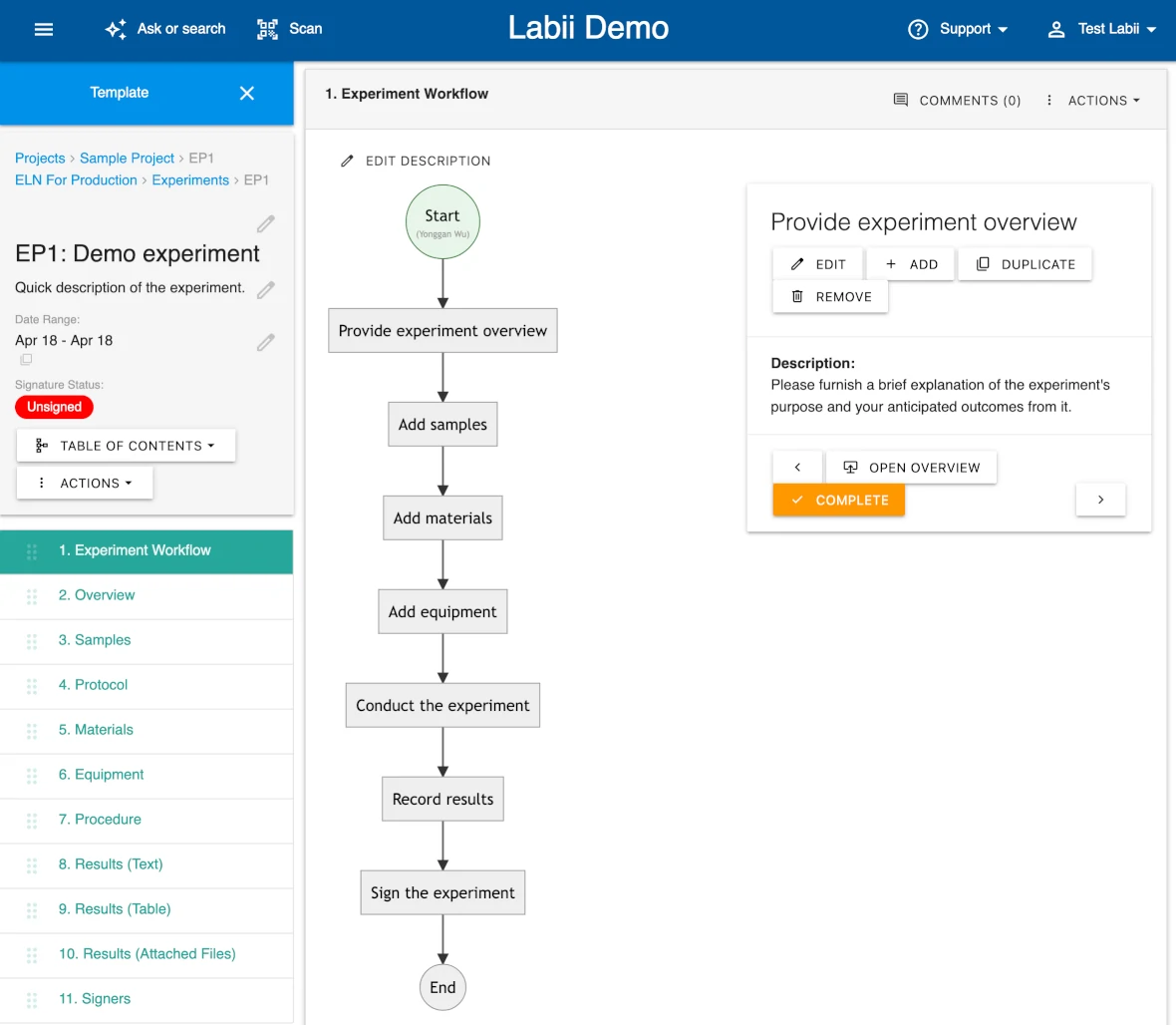
Labii represents the next generation of ELN: workflow-centralized, AI-guided, and fully integrated by design.
#### Why Labii Leads in 2026
* True All-in-One Platform
Native integration with:
* ELN
* LIMS
* Inventory & Sample Management
* Equipment Management & Scheduling (EMS)
* Project Management
* CRM & External Systems (e.g., ERP, accounting)
* Workflow-Centralized ELN (Not Daily Notes)
The old model of “document what I did today” is obsolete.
In Labii, the ELN is driven by workflows:
* Experiments define *what should happen*
* Steps define *when and how*
* Data is collected *as the work happens*
* ELNGPT: From Actions to Documentation
Instead of writing pages of notes:
* ELNGPT can generate structured ELN entries from completed actions
* Convert workflows, results, and metadata into clear scientific narratives
* One click → a complete experiment record
* AI-Guided Experiments
Labii doesn’t just record experiments — it guides them:
* Tells users which step to do next
* Validates required inputs
* Collects structured data automatically
* Reduces protocol deviation and missing data
* Unmatched Flexibility
Every lab works differently. Labii allows:
* Custom tables, fields, workflows
* Workflow-specific ELNs, not one generic notebook
* Seamless adaptation as workflows evolve
Best for:
Organizations that want a single, scalable system for ELN + LIMS + Inventory + EMS + Projects — without compromises.
***
### 2. [Benchling](https://www.benchling.com/)
Strong ELN with Expanding Ecosystem
Benchling remains a popular choice, especially in biotech and molecular biology.
Strengths
* Polished ELN experience
* Good sample and inventory tracking
* Strong molecular biology tools
Limitations
* Customization beyond core workflows can be restrictive
* Integrations often require additional modules or external tools
Best for:
Biotech teams with relatively standardized workflows.
***
### 3. [Dotmatics](https://www.dotmatics.com/)
Enterprise-Focused Scientific Informatics
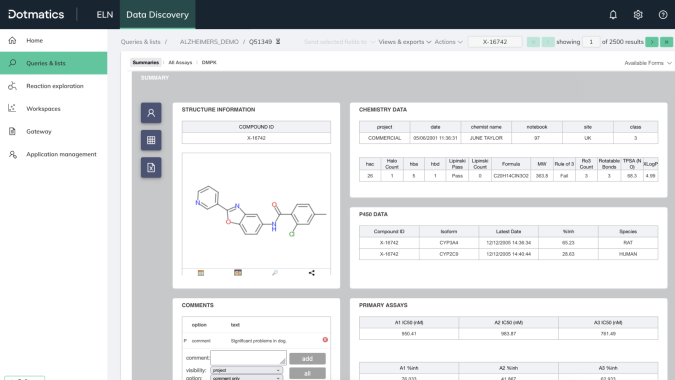
Dotmatics provides ELN as part of a broader informatics portfolio.
Strengths
* Strong chemistry and biology tools
* Enterprise-grade compliance
* Multiple integrated applications
Limitations
* Complex deployments
* Higher cost and longer onboarding cycles
Best for:
Large pharma and enterprise R\&D environments.
***
### 4. [Thermo Fisher Scientific (SampleManager ELN)](https://www.cgm.com/usa_en)
ELN Closely Tied to LIMS
Thermo Fisher’s ELN is often deployed alongside SampleManager LIMS.
Strengths
* Tight coupling with LIMS
* Strong compliance and validation support
Limitations
* Less flexible ELN customization
* Heavier IT involvement required
Best for:
Regulated labs already standardized on Thermo Fisher systems.
***
### 5. [LabWare](https://www.labware.com/)
LIMS-First, ELN-Second
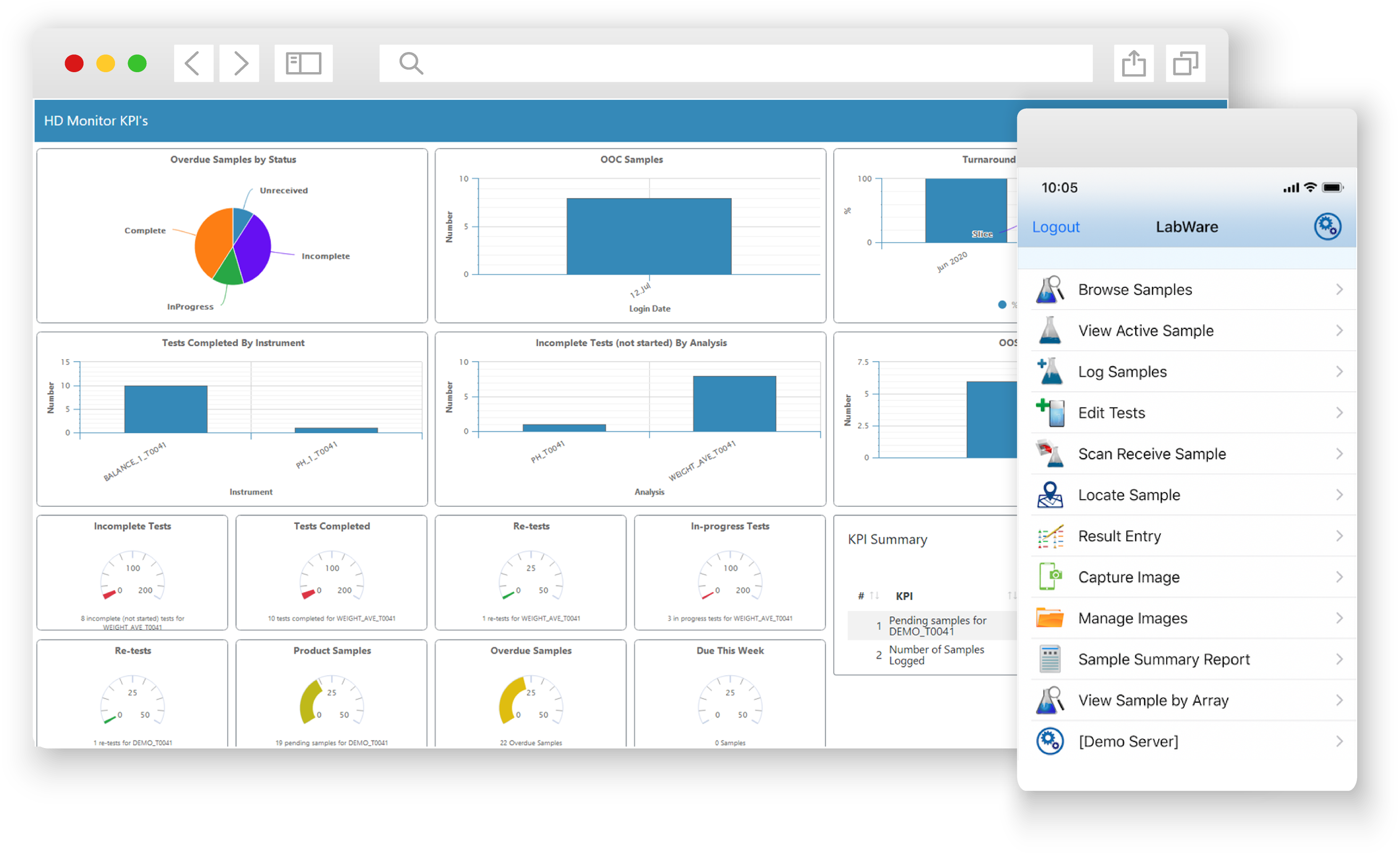
LabWare offers ELN tightly integrated with its LIMS platform.
Strengths
* Robust LIMS workflows
* Strong audit trails and compliance
Limitations
* ELN experience is less modern
* Limited AI and workflow intelligence
Best for:
Quality-focused labs with LIMS-driven operations.
***
### 6. [Sapio Sciences](https://www.sapiosciences.com/)
Configurable LIMS + ELN Platform
Sapio emphasizes configurable workflows and automation.
Strengths
* Unified ELN + LIMS
* Flexible workflow builder
Limitations
* Less focus on inventory and EMS depth
* AI capabilities still emerging
Best for:
Labs seeking configurable LIMS-centric workflows.
***
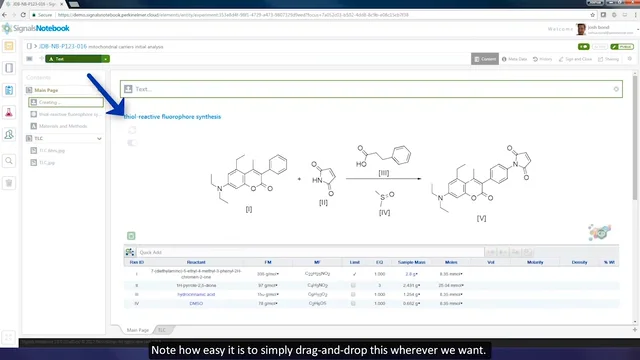
### 7. [PerkinElmer (Signals Notebook)](https://revvitysignals.com/products/research/signals-notebook-eln)
Data-Centric ELN for Analytics
Signals Notebook focuses heavily on data visualization and analysis.
Strengths
* Strong analytics integration
* Excellent chemistry data handling
Limitations
* Less operational workflow coverage
* Inventory and EMS integration often external
Best for:
Data-heavy research teams focused on analysis.
***
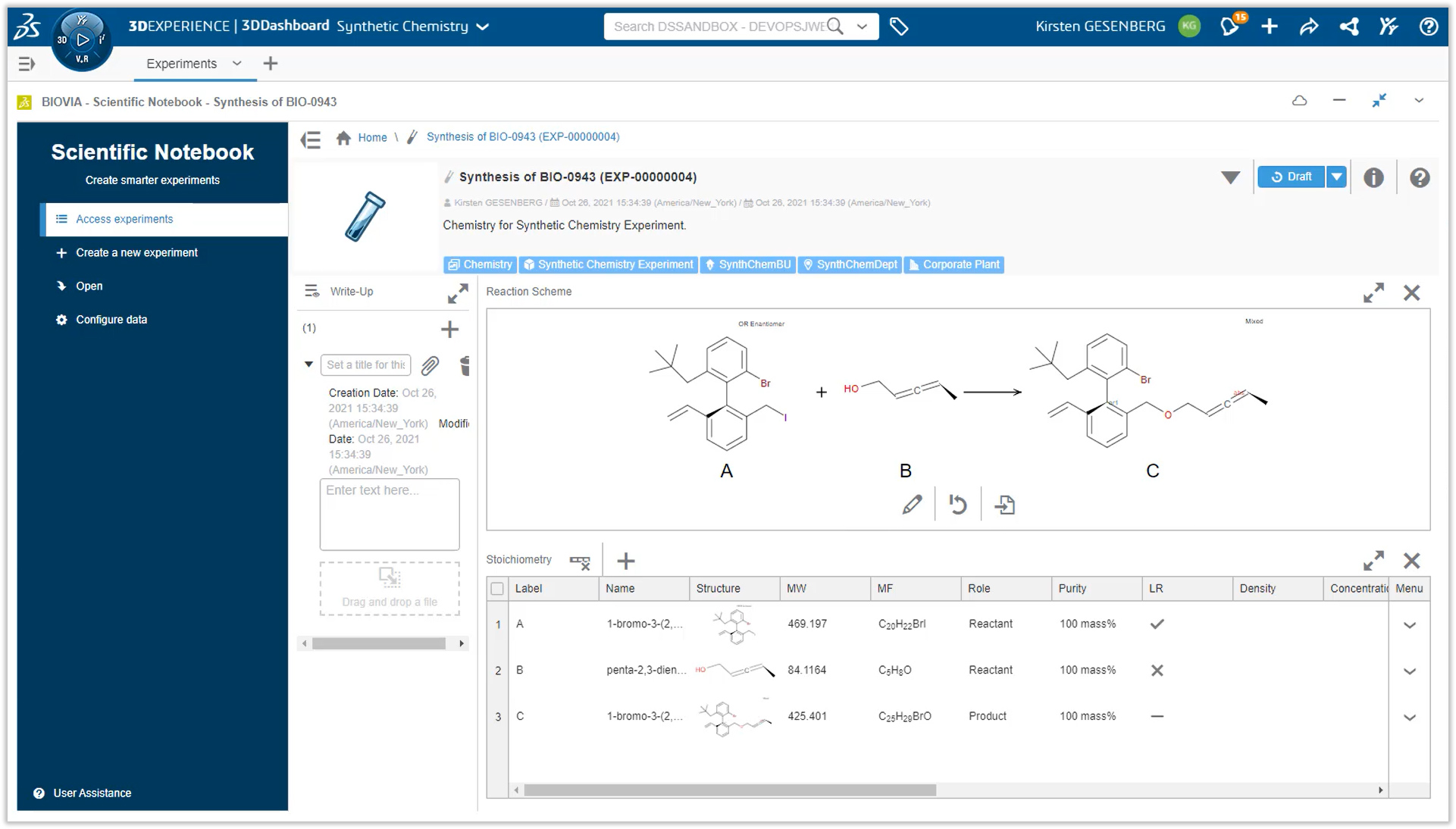
### 8. [Dassault Systèmes (BIOVIA ELN)](https://discover.3ds.com/biovia-unified-scientific-innovation)
ELN as Part of PLM Ecosystem
BIOVIA ELN integrates into Dassault’s broader PLM strategy.
Strengths
* Strong modeling and simulation links
* Enterprise-scale architecture
Limitations
* Steep learning curve
* Overkill for smaller teams
Best for:
Organizations already using Dassault PLM solutions.
***
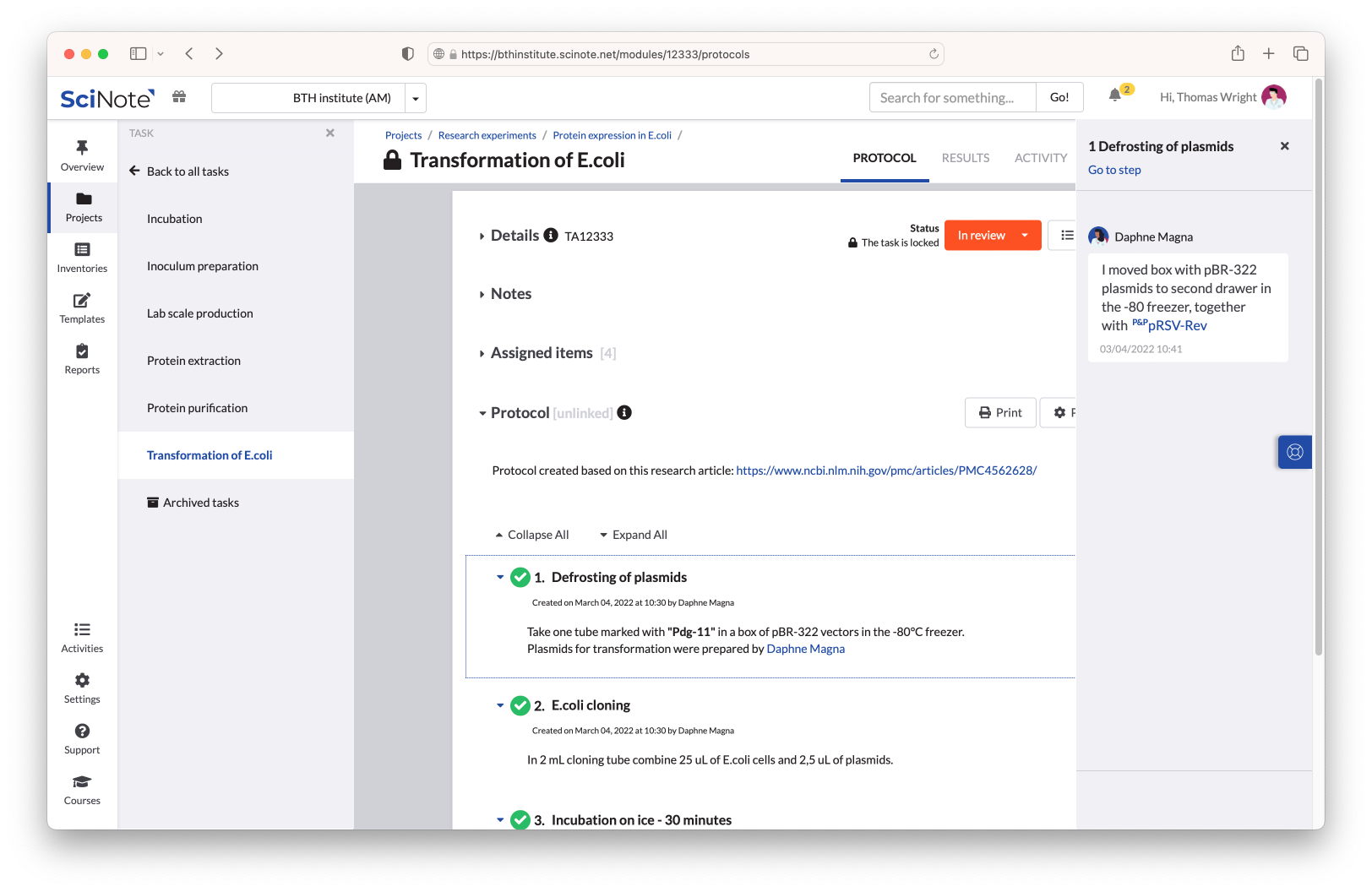
### 9. [SciNote](https://www.scinote.net/)
Simple, Accessible ELN
SciNote focuses on usability and academic labs.
Strengths
* Easy to use
* Affordable entry point
Limitations
* Limited deep integration
* Not designed for complex, multi-system workflows
Best for:
Small academic labs with basic needs.
***
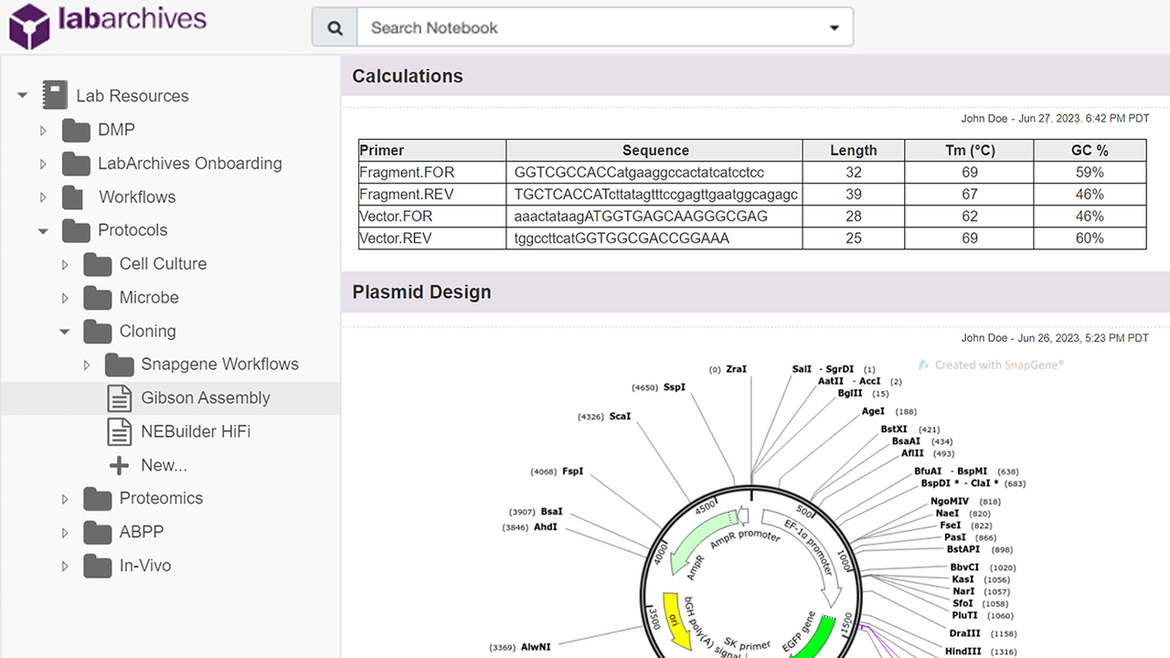
### 10. [LabArchives](https://www.labarchives.com/)
Documentation-First ELN
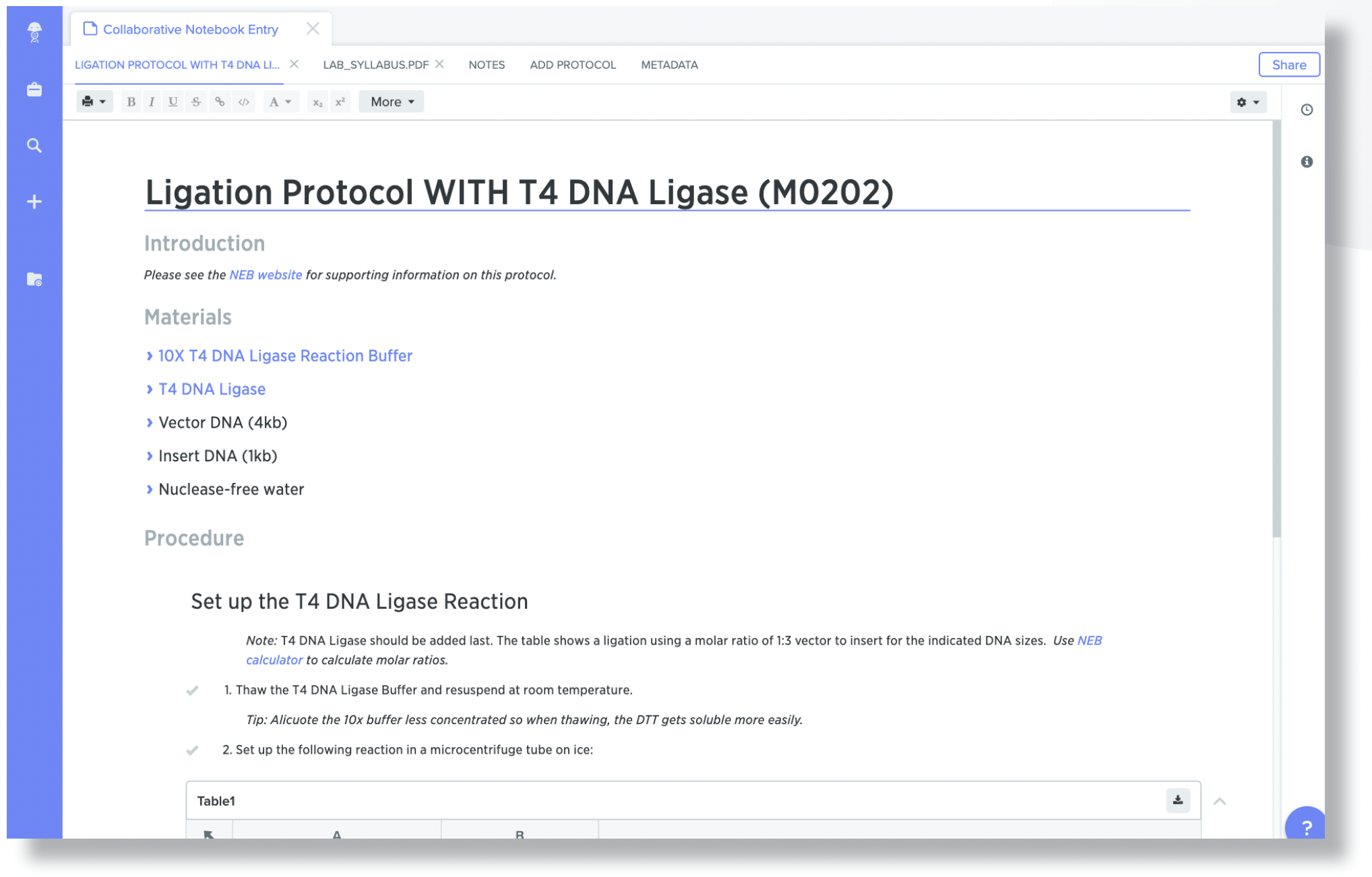
LabArchives remains focused on traditional ELN documentation.
Strengths
* Familiar notebook experience
* Strong academic adoption
Limitations
* Minimal workflow automation
* Limited integration with inventory, EMS, or LIMS
Best for:
Teaching labs and basic documentation use cases.
***
### Final Thoughts: ELN Is the Workflow Hub in 2026
In 2026, an ELN cannot work alone:
* Samples are loaded from Inventory
* Equipment usage is scheduled via EMS
* Tests are executed in LIMS
* Experimental steps are captured in ELN
* Projects, collaborators, and even customers are tracked across systems
The future belongs to workflow-centralized, AI-guided, fully integrated ELNs.
Labii leads this shift by transforming ELN from a passive notebook into an active research assistant — guiding experiments, collecting data automatically, and generating high-quality documentation through ELNGPT.
If your ELN still only records what happened *after the fact*, it’s already behind.