Introducing Labii Chemical Synthesis: Connect Reactions, Compounds, and Batches
Published on November 13, 2026
Chemical synthesis creates more than a final product. Every experiment also produces a network of information: starting materials, molecular structures, reaction conditions, calculations, observations, and batches. When those details are divided among notebooks, drawing tools, spreadsheets, and inventory systems, scientists must spend extra time reconstructing how a compound was made.
Today, we are introducing Labii Chemical Synthesis, a connected application for planning and documenting synthesis work. It brings compound records, reaction documentation, chemical visualization, stoichiometry, configurable workflows, and material tracking into one workspace while preserving the relationships between inputs, reactions, and outputs.
Build a Dependable Record for Every Compound
Each compound can have a consistent record for its identity, structure, properties, and related batches. Instead of copying the same information into multiple experiment files, scientists can reference connected compound data when planning a reaction or reviewing previous work.
Because Labii uses a configurable data model, an organization can define the fields and relationships that match its own synthesis process. The result is a shared source of context without forcing every team into the same rigid record design.
Document the Complete Reaction Context
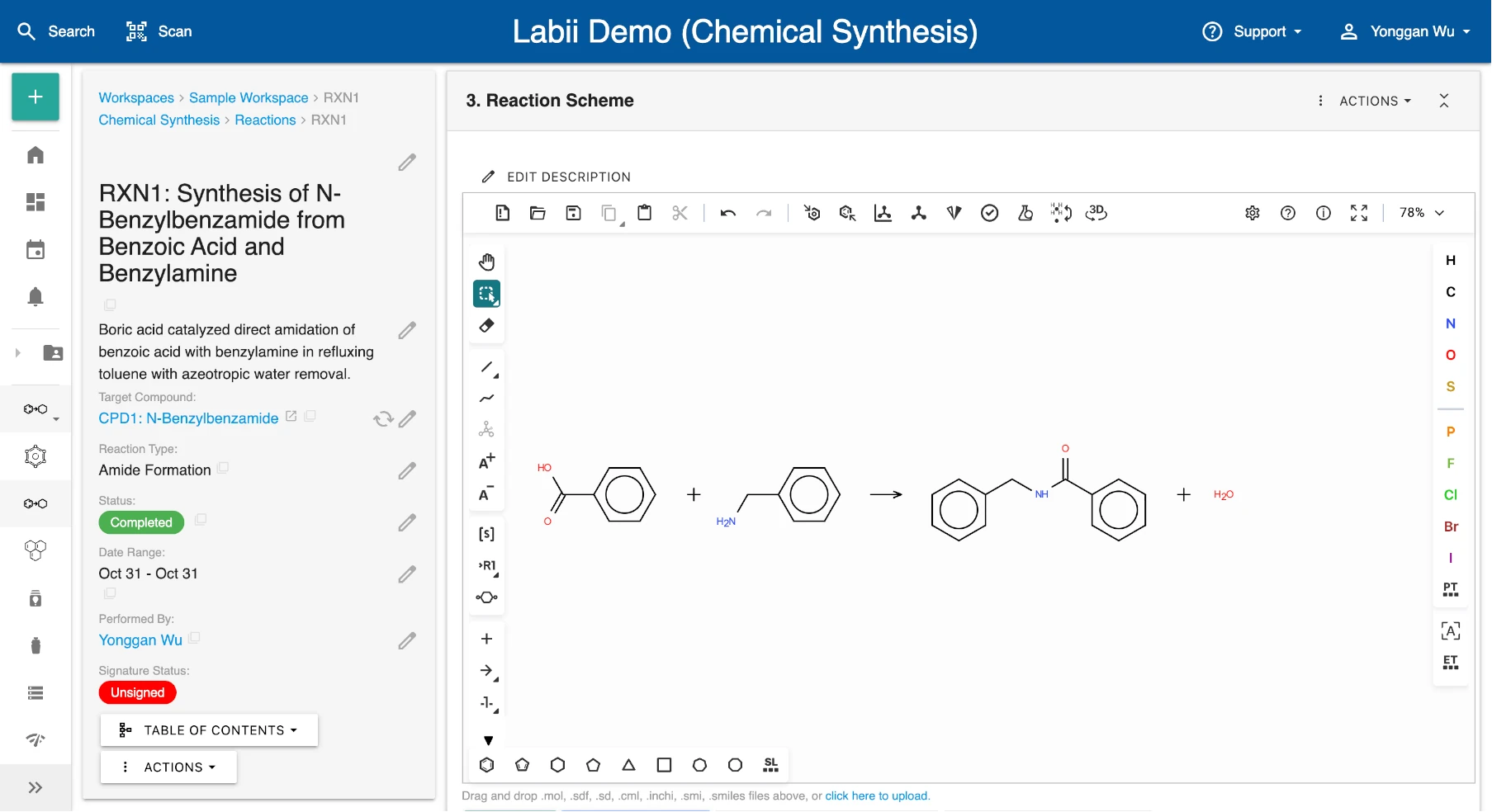
A synthesis record can keep reactants, products, conditions, observations, and outcomes together. The reaction can link directly to its input compounds and generated products, making it easier to answer an essential question later: how was this compound produced?
Visual chemical structure and reaction widgets keep molecular drawings and reaction schemes beside the experimental data they describe. Scientists can review the chemistry in context instead of switching between disconnected drawing files and laboratory records.
Plan Reagent Quantities with Stoichiometry
Labii supports automatic reaction-equation balancing and stoichiometry. A reaction scheme can therefore become a practical plan for material requirements, helping scientists calculate reagent quantities consistently and adjust the scale of a synthesis with less manual arithmetic.
Keeping these calculations in the reaction record also preserves the connection between the planned quantities and the experiment they support. Reviewers can see the scheme, the material plan, and the documented work in one place.
Turn the Synthesis Process into a Workflow
Synthesis work often includes more than performing the reaction itself. Teams may need planning steps, required forms, checkpoints, decisions, and completion criteria. Configurable Labii workflows can represent that sequence and guide scientists from planning through completion.
A shared workflow makes the current status visible and gives each team member a clear next step. Organizations can configure the process around their own requirements rather than maintaining separate instructions beside the scientific record.
Trace Materials from Input to Product Batch
As scientists document a synthesis, Labii can track the materials consumed and connect generated compound batches to the reaction that created them. Linked inventory, compound, reaction, and batch records preserve the path from starting material to output.
This connected history helps teams review:
- Which materials were used
- Which reaction consumed them
- What compound and batch were produced
- Where a product batch originated
By keeping material movements and scientific context together, Labii reduces the effort required to reconstruct a synthesis history across separate systems.
One Connected Workspace for Chemical Synthesis
Labii Chemical Synthesis combines structured records with the flexibility of the broader Labii platform. Compound data, reaction schemes, calculations, workflows, inventory activity, and batches remain connected to the scientific work that gives them meaning.
Visit the Labii Chemical Synthesis product page to explore the application, watch Labii demo videos, or sign up for free to start building a chemical synthesis workspace for your team.